
Body of Work
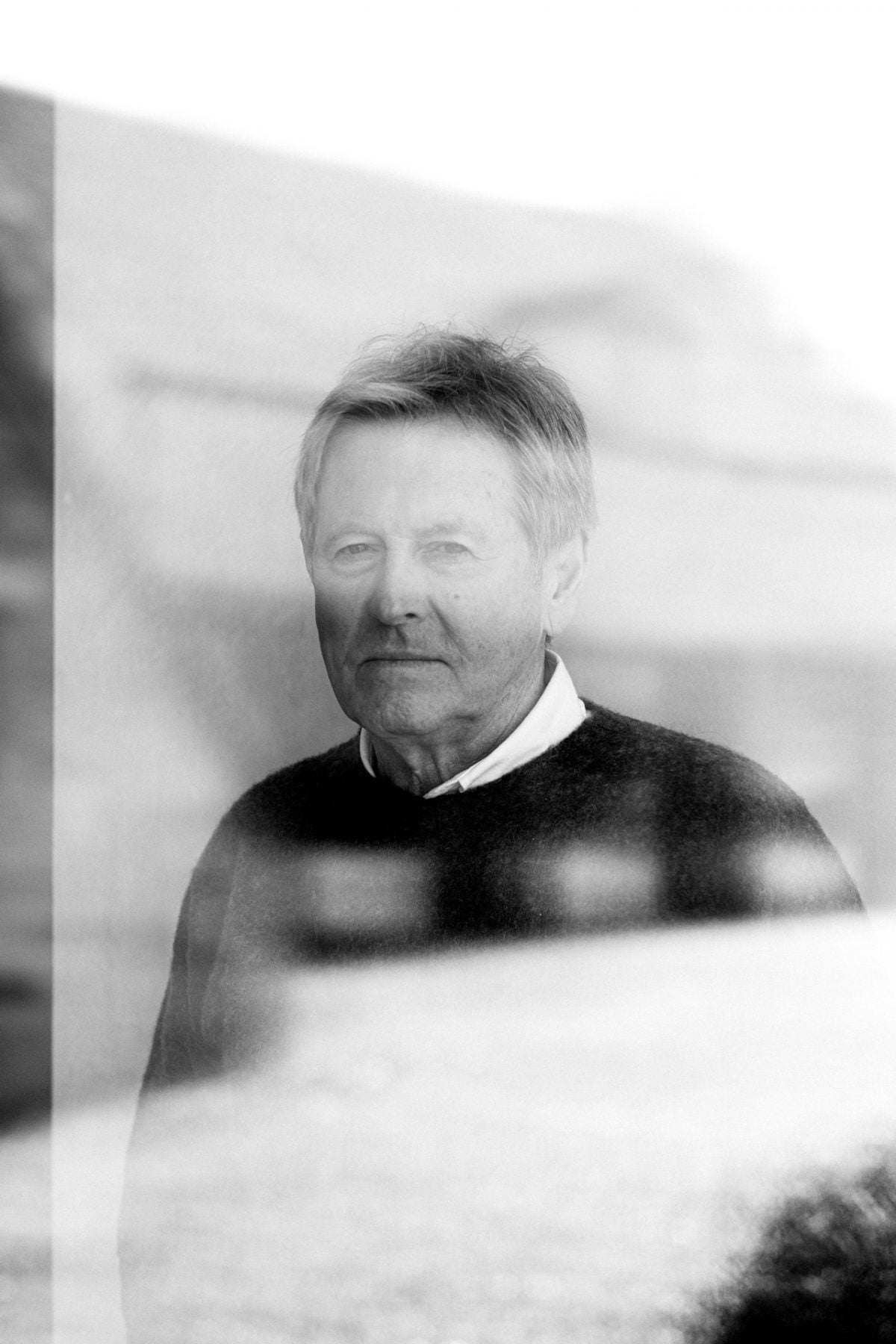
Somewhere in the rolling idylls of Oxfordshire, architect John Pawson busies himself in his library. His sprawling Home Farm is in character with the heritage farms of the area, but inside is littered with Pawson’s fingerprints. Its large windows pull in the late morning sun as it easily suffuses the space. Warming up the natural hues of stone, linen, and wood, the home grows with the light. Pawson’s home, dubbed Home Farm, has a reductive anima that underscores the sensual impression that is felt throughout every room. Simplicity isn’t the word for it — Home Farm is meticulous in its intention. Each beam, window, textile, and piece of furniture exists here for the sole purpose of conjuring comfort.
The light continues to fill each room, stopping to illuminate Pawson at his desk. Surrounded by books, he looks at ease as if he’s figured out how to balance work and life. We join Pawson here as he anticipates the release of a biography on his forty-year career. His cockapoo, Lochie, curled up on a woollen blanket, listens on as we begin.

First things first, tell us about your career’s origin story. Who were you before studying architecture?
I never did very well academically. I never got A levels. In fact, I did so badly in French and Spanish A level, that as a conciliatory, they gave me O levels at A level. So I’m a rare person that’s got two French O levels and two Spanish O levels [laughs].
I left school and went travelling for a couple of years. My father said, “If you don’t come back now, there’ll be no place in the family business for you.” He had some factories making women’s clothes. I spent six years working for dad near Newcastle, up in the northeast, and in Halifax in Yorkshire.
But, it didn’t really work out. I was going to get married, and that didn’t work out either. They both coincided at the same time, just before Christmas of 1973. Just then, I met somebody who sold me an around-the-world ticket. The first place I stopped was Tokyo, Japan. I had a friend in Nagoya, which is a couple of hours from Tokyo, and I went straight there. It was Christmas Eve, and following two failures in my life, it was a pretty low period. But, Japan cheered me up.
Tell us more about Japan. How did you become acquainted with Shiro Kuramata?
When things weren’t going too well for me, it coincided with me seeing a documentary on a Zen Buddhist monastery in the mountains in Japan. And I thought, “Gosh, that’s the answer. I’ll go away and forever become a Zen Buddhist monk.” I was 24 going on 12, I think. I had that schoolboy idea that I could suddenly transform myself into a Zen Buddhist monk.
My Japanese friend introduced me to his father, who was actually a Buddhist monk on the outskirts of Nagoya. He drove me up to Eihei-ji, and I tried one night there. I thought I was going for 10 years and ended up for one night. So I mean, that didn’t work, but I wanted to stay in Japan.
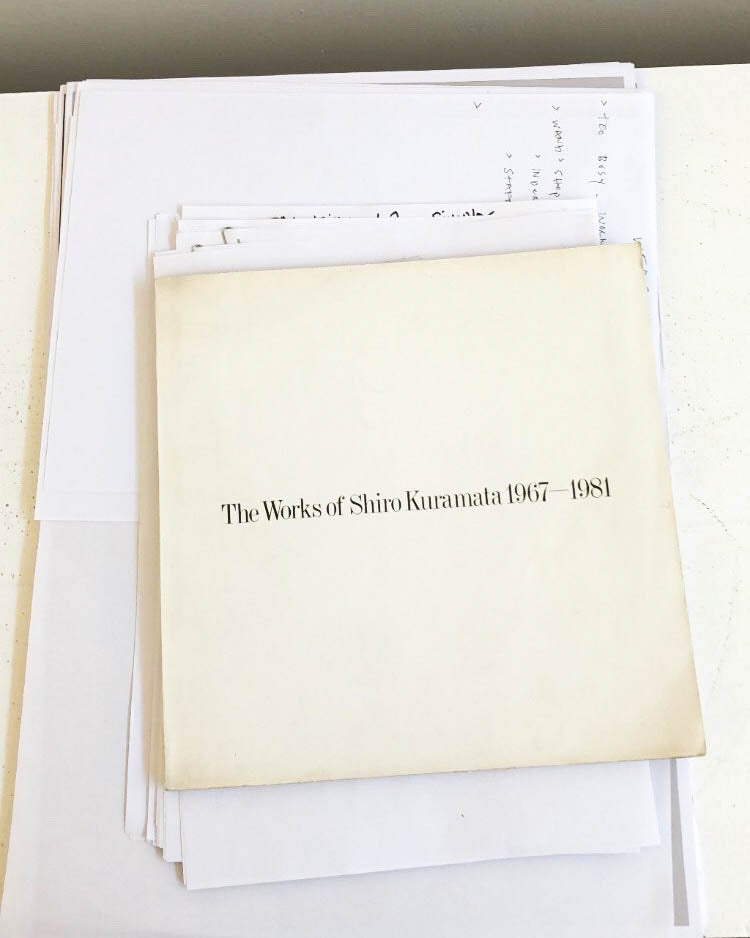
I’d seen a book in Tokyo on Kuramata and I thought, “This is the guy.” I called him and said, “I’m John Pawson, can we meet?” It was just the insouciance of a 24-year-old. Of course, I would never do it now, but you just don’t think of what you can’t do or what you shouldn’t do. I think he was just as mystified. He turned up, we had a coffee, and that was that.
What else inspires your work?
Every movement in architecture gives you something. At school, you study different movements and you absorb things as you go. The most influential architect to me has been Mies van der Rohe. Somehow, he’s the ultimate architect. It wasn’t until I saw Kuramata’s work that I thought, “Well, here is a living version of Mies’s work.” I have a very sort of narrow personal taste, but Mies fulfils most of that.
What of your passions? Have they changed throughout your career?
I don’t think I’ve changed that much. Architecture has been the one thing that I came to relatively late to practice. It wasn’t until I was in my mid- to late-thirties that I actually started doing it. But, it had always been a passion for me, this idea of space and what made me feel different in space. But before that, there were lots of things that I was interested in besides architecture, like cycling.
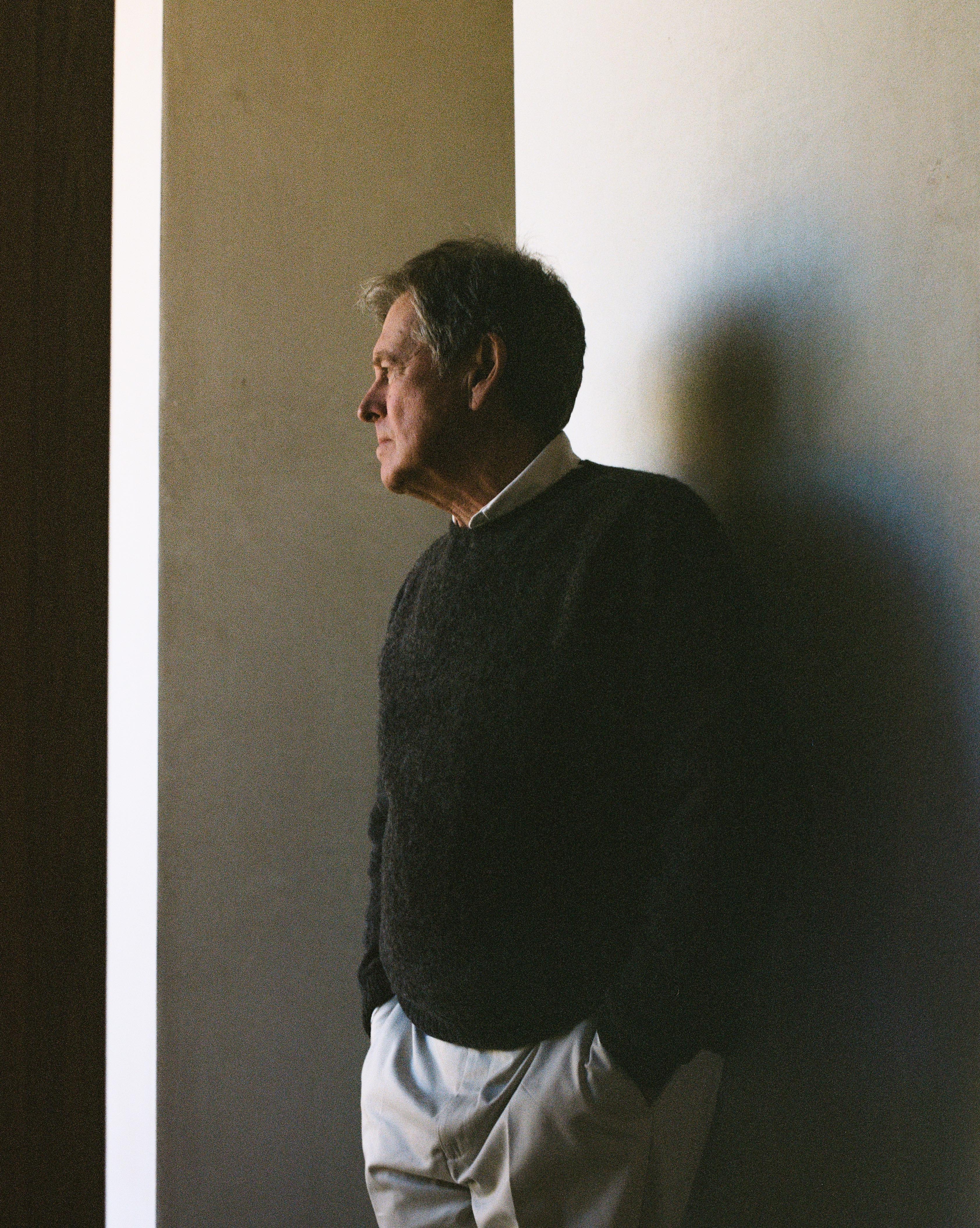
You’ve been hailed as a minimalist, but how would you describe your design philosophy?
It’s funny how popular the word minimal has become. I don’t argue about being called minimal or minimalist, or whatever. But, in the work, I’m always trying to look for the essential. I’m more like an essentialist, I suppose. It’s about trying to find clarity in the work and refining it until it’s as good as it can get. Architecture’s difficult because you’re building which is an imprecise business; it’s very, very difficult to get it perfect. You can’t keep on working at it. You can’t move walls once they’re up. You can’t change space once it’s been created because, whereas with an object, you don’t have to put it into production until you think it’s sort of as good as you can get.
When I was working for the monks, I told them I wanted to make it perfect. They said, “Well, only God is perfect.” It’s funny that a client will settle on 99 per cent as being good enough.

Can you tell us about some of your more difficult projects and the important things you’ve learned from them?
I’ve been doing this for 40 years. Every project is … I wouldn’t necessarily say difficult, but you have the same drive to make each project as special as possible. Otherwise, there’s no point. Everything has to be done as intensely as possible, however small or big. Being human, not every project works out as successfully as another, but you approach each one exactly the same. You try and keep your head down, and then occasionally you raise it to review the work in a book or something, then move on.
How do you approach architecture’s fundamental problems when you’re setting a new project in motion?
Designing is, I find, a very methodical business. You learn how to design, but the way I approach things is: you have a site, you visit the site, you take note of the local architecture, you take note of the climate, the flowers, the flora and fauna. At the same time, you are listening — usually to the client,
because they want you to be there when they see it. You have these two things you have to deal with. Luckily, the brain can cope. You’re wandering around in this strange state, taking it all in. Then, you go back and you have a blank piece of paper and you make a start. The big trick is not to hang around too long. I mean, you make a start, whatever it is, even if it’s wrong, or completely the opposite.
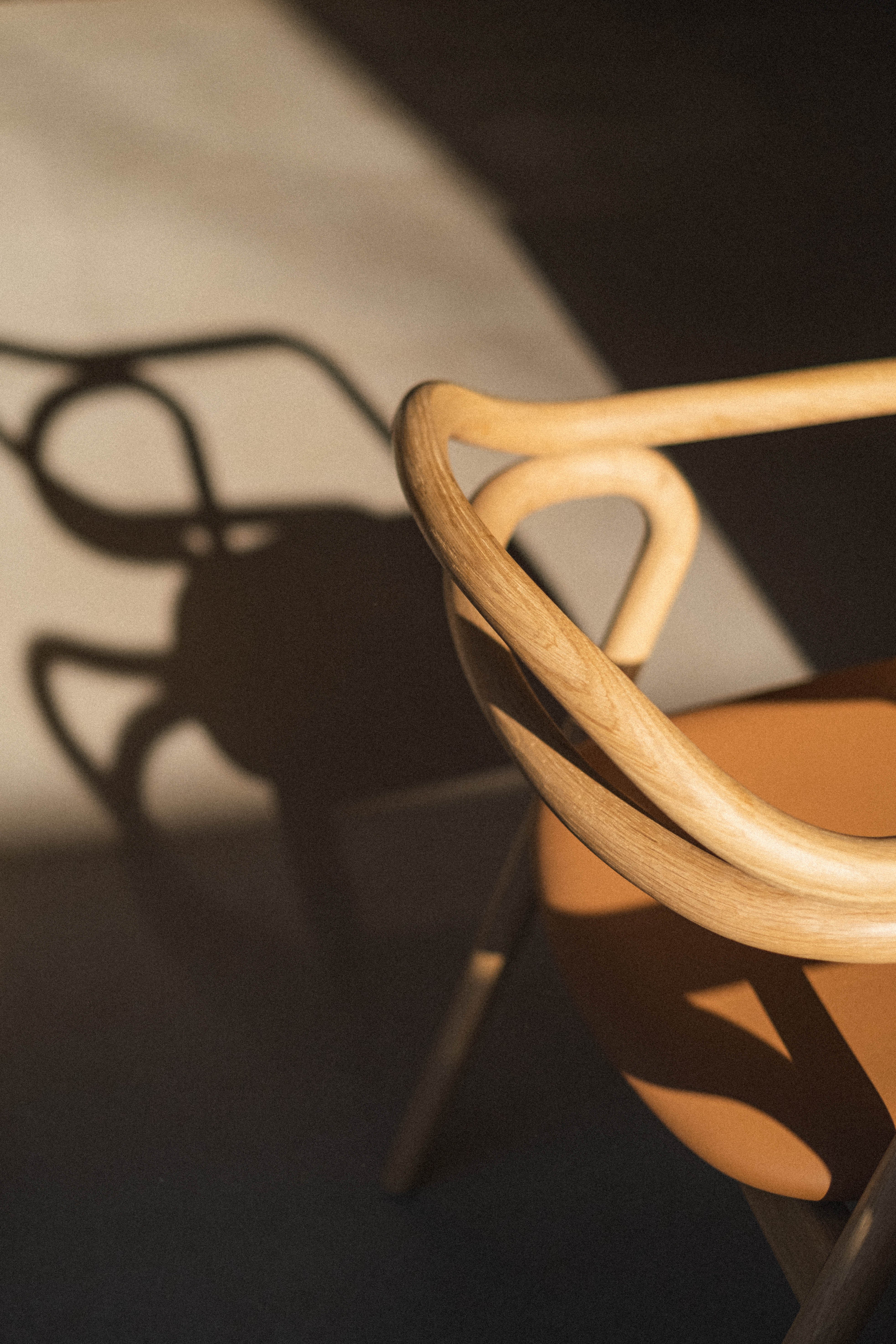
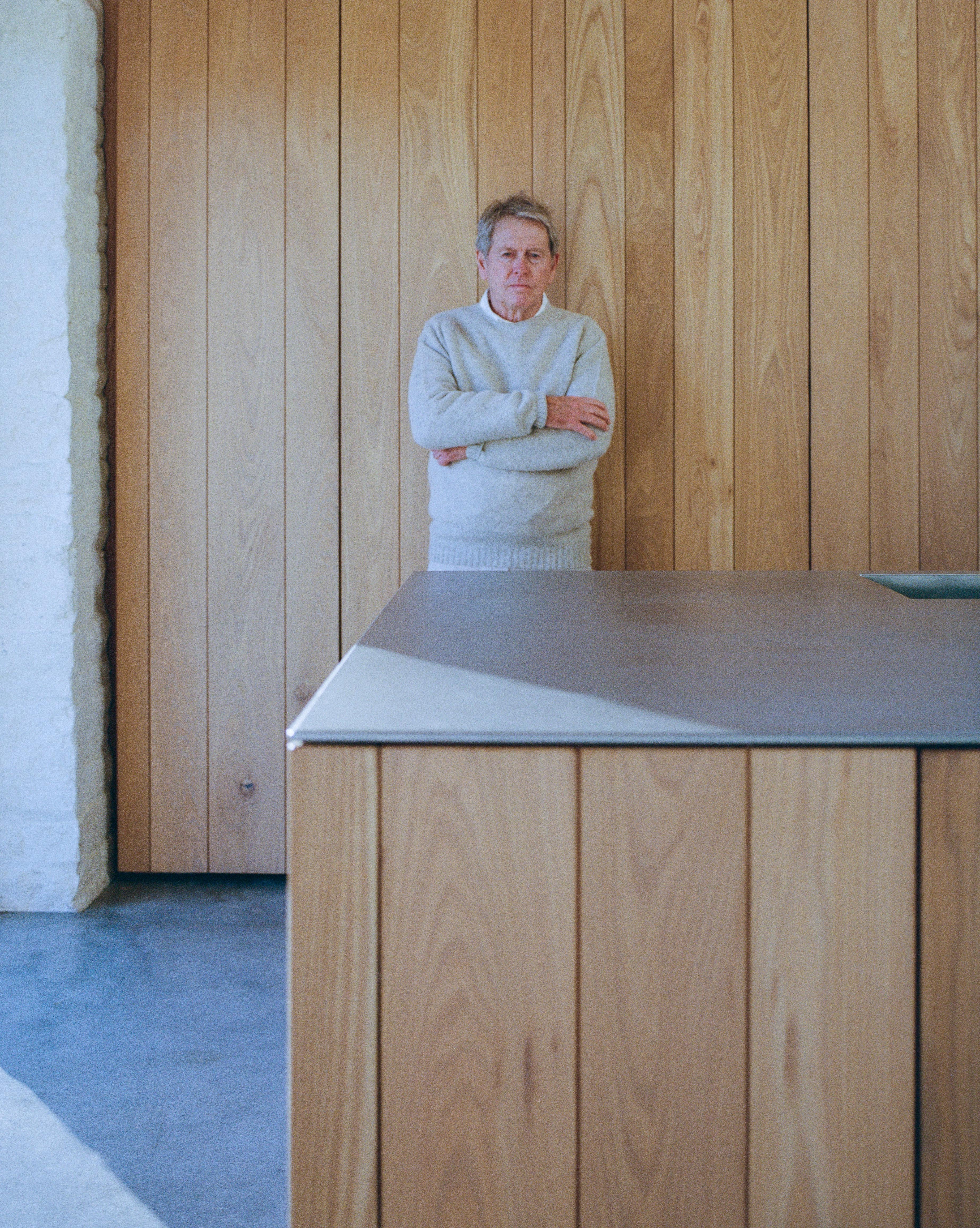
What do you get from photography that you don’t get from design?
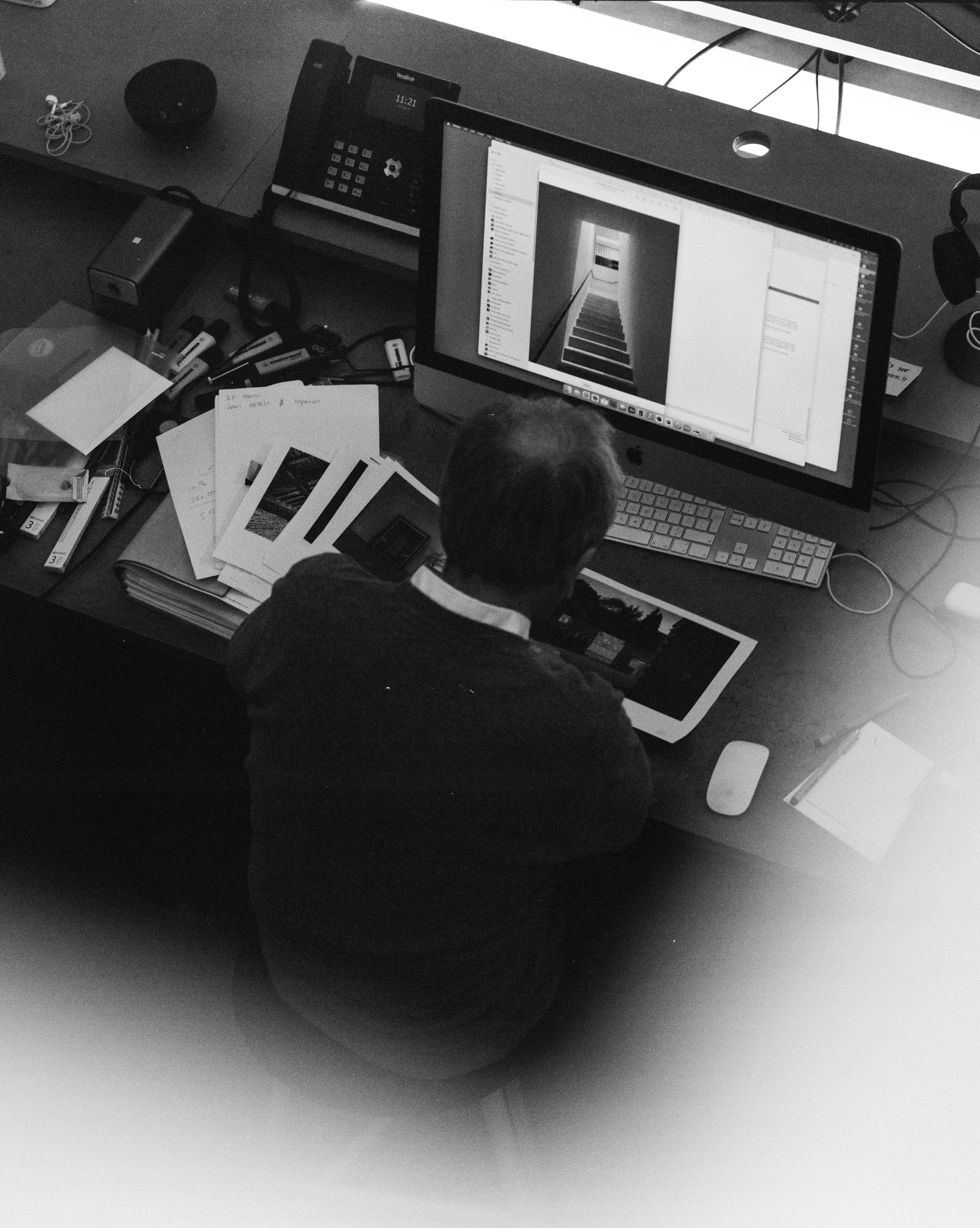
Immediacy. I’m actually, by nature, not that patient or not that painstaking. I mean, I love order, because my head is so messy. But it’s the ability to take a photograph and control that. It’s a quick thing. In designing buildings, you can work on a project for five years or ten years even. Whereas a snap is literally that. A snap.
Tell us more about your upcoming exhibit in Tokyo.
We’ve been offered this exhibition at The Mass Gallery in Tokyo, which is three different pavilions in the centre behind Omotesando in Shibuya. It has these beautiful, modern concrete pavilions, one of which is outside. They’re showing works from my book, Spectrum. I’ve done a new series of photographs called Home, which is a self-portrait, really. They’re pictures of this house and from the house in London. They are a self-portrait, even though they’re photographs of interiors. They reflect me.